This conventional historical sword remains a remarkable work of art, but consider if you desire to communicate your individual character? Customizing your armament is a fulfilling journey, allowing you to design a truly matchless piece. From the hilt wrapping and binding to the handpiece design and heat mark, each feature offers a chance for personalization. This examination delves into the field of katana adjustments, providing facts for both beginners and proficient enthusiasts desiring to leave their footprint on the classical art of the samurai.
Newcomer's Legitimate Mastery
For individuals prepared to embark on the beneficial journey of classical sword techniques , 1060 steel katanas extend an excellent entry point. This certain grade of elemental-based steel obtains a sweet spot between expense and efficiency . While below hard as supreme steels, 1060 allows for a workable level of blade refinement , making it tailored to trainees to improve the fundamentals of katana upkeep and admire the allure of classic Japanese weaponry. It’s a first-rate choice for obtaining experience without the pecuniary burden of more enhanced steels.
T10 Steel Katanas : Balancing Performance and Affordability
To help hobbyists seeking an authentic sword experience without exceeding the budget , T10 alloy katanas represent a compelling option. These weapons offer a significant improvement in robustness compared to middling alternatives, exhibiting satisfactory edge retention and tolerable flexibility for primary severing techniques. While not rivaling the outstanding characteristics of top-tier steels like T100 or folded metal , T10 provides a remarkable blend of power and profitability, making them a sought-after choice for initiates and those on a fixed budget .
Beyond the Sharpness : Adjusting Your Blade's Hardware and Hold
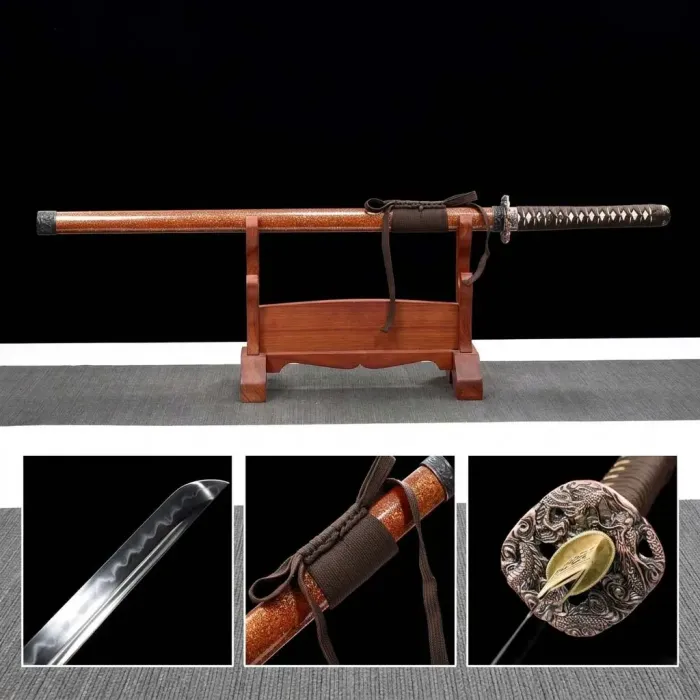
Considering the buffed steel is undeniably the focal point of a katana, truly heightening its appeal lies in the thoughtful customization of its fittings and haft . This procedure allows enthusiasts to manifest their one-of-a-kind taste . Weigh the extensive possibilities: menuki - decorative decorations that bring visual interest ; the hamon protective covers – often carefully engraved ; the tsuka center itself, wrapped in traditional ito cord ; and the fusa butt cap , which can be fabricated from various elements like treasures or antler .
- Prefer concepts that echo with you.
- Explore with different ingredients .
- Prioritize superiority for a lasting influence .
The Fascination of the Katana: Origins, Mastery, and Material
Each nihonto exhibits a unique allure, steeped in generations of Far Eastern history and custom . More than merely a weapon of combat , it's a mark of the samurai ethos – a fusion of expertise and command . Its development spanned many generations, with early metallic weapons evolving into the slender curvature and lethal edge we identify today. The production involved is truly remarkable , requiring lifetimes of mentoring to achieve . The process involves a multifaceted folding of steel bloom , creating layers that boost the steel’s flexibility and cutting ability. Various schools of blacksmithing started , each with their special secrets and formulas for achieving the ideal equilibrium and edge - a truly strenuous pursuit.
- First Katana classes
- The importance of the katana in samurai culture
- Ancient metalworking approaches
Choosing the Perfect Steel for Your Sword Project Project: 1060 vs. T10
Electing the appropriate steel is crucially important for any oriental blade project, and the resolution between 1060 and T10 can be tough. 1060 is a well-known American fabrication, offering a respectable balance of robustness and fortitude, enabling it moderately easy to handle. However, T10, a East Asian steel, commonly boasts improved wear longevity and can arguably achieve a greater final hardness, although it samurai sword can be more difficult to apply and requires detailed heat forging. Consider your competency and targeted characteristics: for a newcomer, 1060 may be a more inception, while the competent smith might value the supplementary qualities of T10.
- Ease of Operating
- Resistance
- Definitive Durability
Revealing the Strength: Expert Katana Improvement Strategies
Honing the expertise in edge enhancement extends far beyond basic stropping. Serious professionals are now examining advanced techniques to truly unlock a blade's hidden potential. This demands intricate work with the quenching mark, utilizing specialized substances for differential processing and carefully picking the geometry of the shield to optimize balance and efficiency. Beyond purely functional enhancements, artisans are increasingly focused on reaching unparalleled aesthetic beauty, through complex decorating and layered polishes that truly transform a katana into a work of art.
From Raw Steel to Masterpiece: Crafting a 1060 Katana
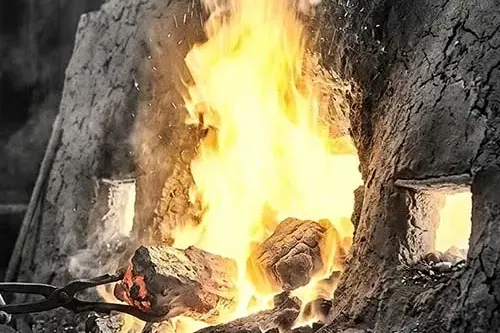
The journey initiates with common 1060 material , a rigid material far apart the polished katana it will mature into . Master bladesmiths execute a intricate process of stacking and shaping the initial steel, repeatedly heating it and forging it to purify impurities and develop a symmetrical grain structure. This laborious process, often spanning for days , builds the required force and pliability characteristic of a bona fide Japanese tool. Subsequent heat adjustments , including precise hardening and quenching , are fundamental to achieve the desired harmony of sharpness, persistence and magnificence.- Layering: Minimizes impurities and constructs grain structure.
- Forging: Models the steel into the initial blade form.
- Conditioning: Regulates the final hardness and flexibility.
The Continuing Pull of the Katana: Comprehensive Review of Metalwork and Tailoring
Each established katana stays a captivating symbol embodying Japanese custom , its enticement far surpassing mere combat tools . Forged from unique steel and regularly featuring intricate decorations , the approach of creation itself is a venerated art. Beyond the foundational craftsmanship, the ability to personalize a katana - from the temper line to the hilt wrapping and guard - grants for a authentically individual representation for both devotees and handlers alike. This mixture of legacy steelwork and boundless personalization effectuates the katana's continued prestige across the terra .